
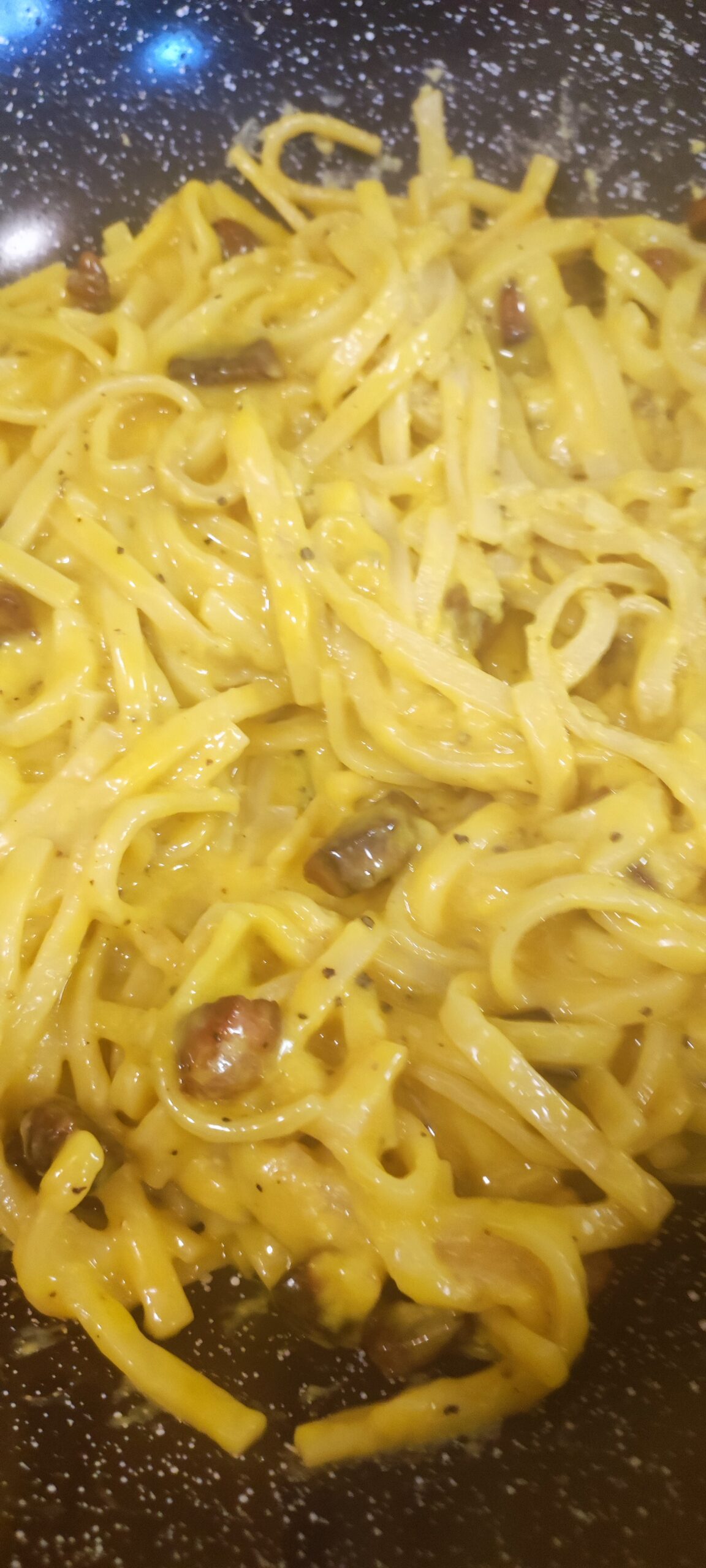
Carbonara
Don’t scamble the eggs!
This high -calorie survival dish in post-World War II Rome created an ideal meal for physical recovery. British and American troops carried rations of bacon and powdered or whole eggs and local cooks combined the ingredients with pasta and created the idea of what is now known as ‘Spaghetti Carbonara’ considered one of the most famous and iconic pasta dishes of Roman cuisine.
This recipe relies solely on egg yolks and cheese to make a delicious, creamy carbonara sauce and of course ‘il guanciale’, the key ingredient and not bacon.
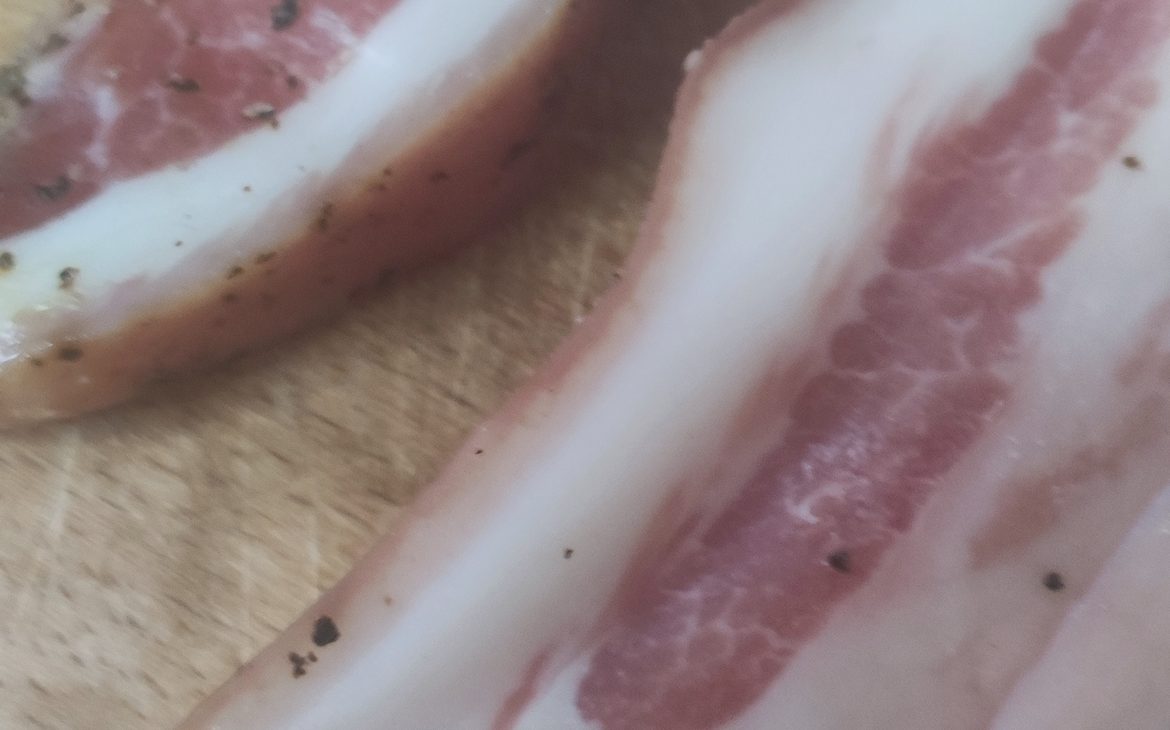
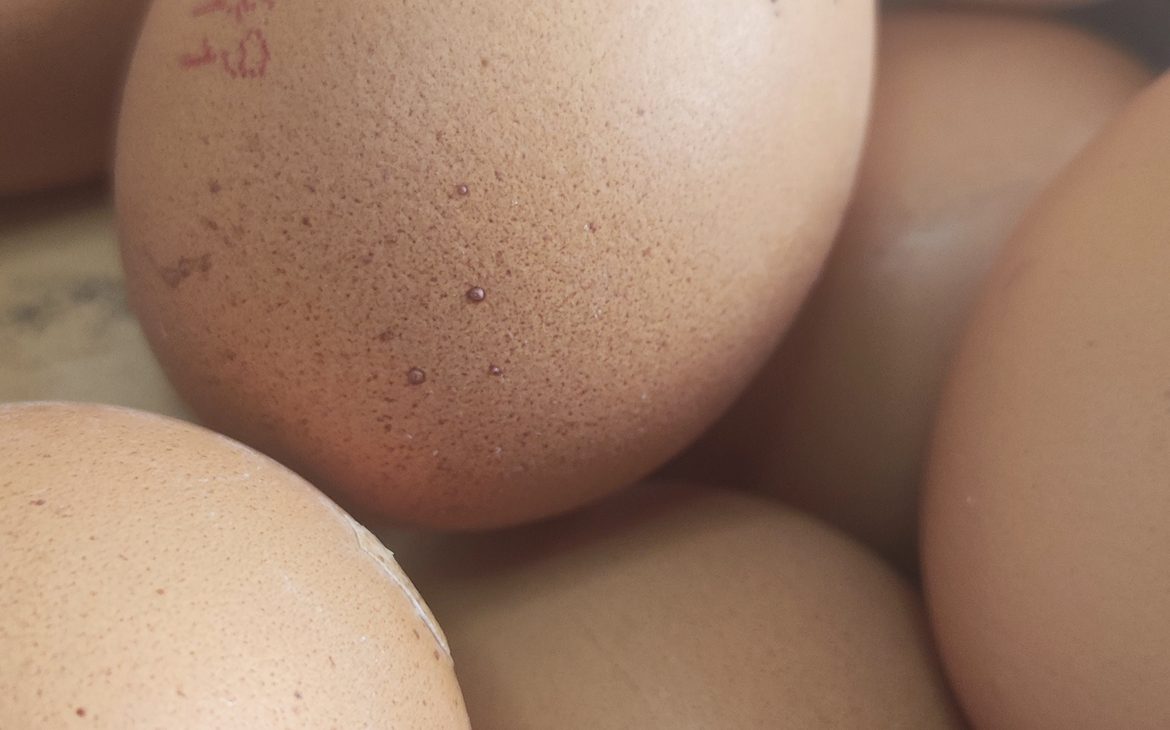
Here are my simple ingredients: spaghetti (I sometimes use fresh pasta), black pepper, crispy guanciale, Pecorino Romano (add some Parmesan if you feel the Pecorino is too strong) and fresh eggs.
The huge challenge is not to scramble the eggs!
It takes about 30 minutes to prepare and cook.
Servings: 4
- 300 g spaghetti. For this recipe I used fresh pasta, but the most common type used is spaghetti.
- 200 guanciale. Guanciale comes from the pig’s cheek which contains a high percentage of hard fat essential to this recipe because it blends in well with the starchy pasta water and egg & cheese mixture in order to create the creamy sauce. Tip: Bacon comes from the pig’s belly so don’t confuse it!
- 8 fresh free-range egg yoks. I prefer 2 egg yolks per serving. It is a tried and tested recipe by my son Mike. The eggs combined with the guanciale fat make the super creamy carbonara sauce.
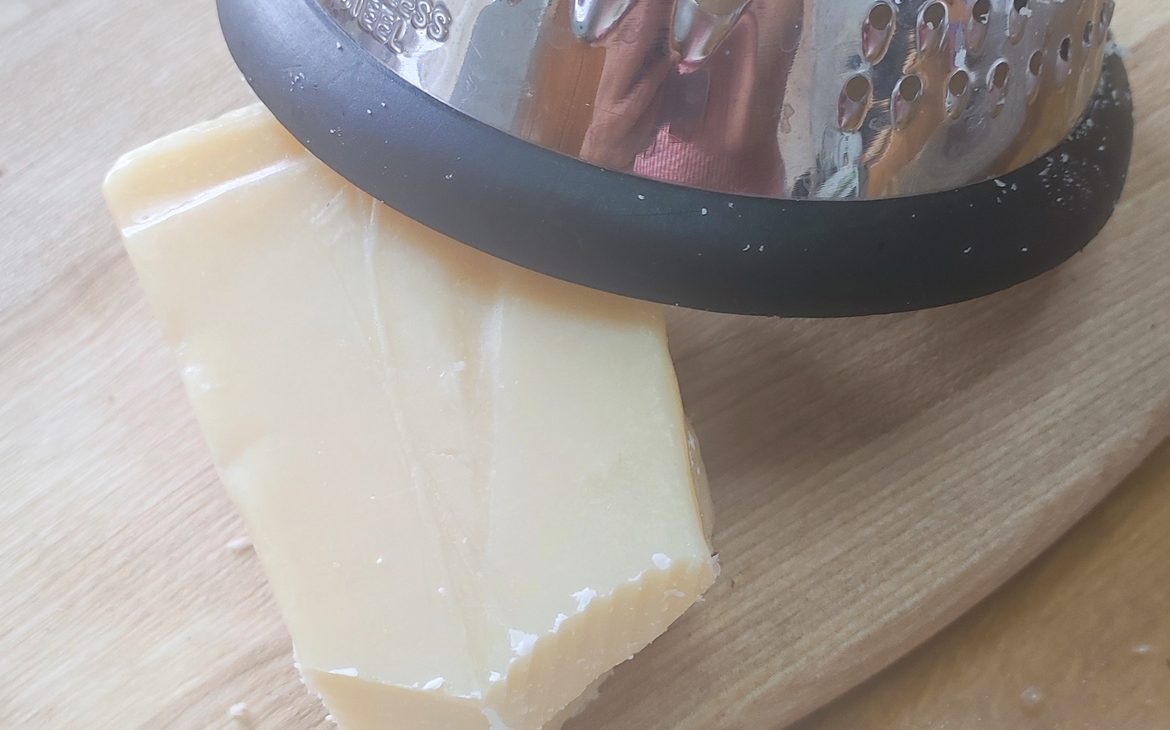
- 100 g ( 1 cup) freshly grated Pecorino Romano DOP as it provides the right taste and melting point to make the sauce. Tip: I often mix in about half a cup Parmigiano Reggiano ( aged so it has more complex flavours) for a milder result, but the purists may not appreciate it! This is my simple cooking! You must grate your own cheese, no pre-grated in my kitchen.
- A generous amount of freshly ground black pepper to add warmth, depth and cuts through rich fats and heavy proteins.
My kitchen utensils
Let’s make it!
Prepare all the ingredients and bring a pot of water to boil while you prepare the carbonara sauce.
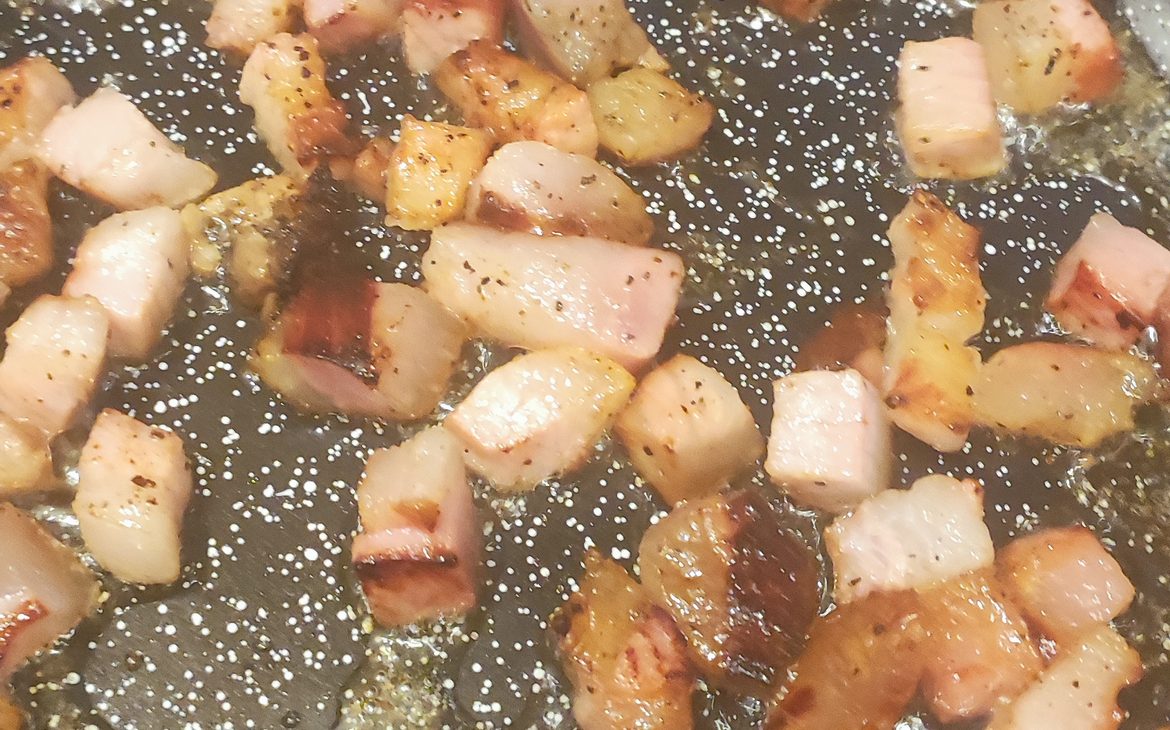
Guanciale: cut the guanciale into strips and cook it in a skillet over medium heat for 5 minutes tossing and turning so it cooks evenly. Once the guanciale is golden and crispy, turn off the heat and set it aside. Tip: no need for oil as the guanciale has delicious fat that melts as it cooks.
Sauce: whisk the egg yolks and cheese in a bowl until smooth and creamy. Add freshly ground black pepper and half of the guanciale. Tip: Pecorino Romano is quite salty so don’t add extra salt to the sauce.
Science Tip: egg yolks are emulsifiers because they contain lecithin, a natural fatty substance which helps mix together ingredients. When you whisk the cheese and egg the proteins from both ingredients bind and blend.
Tip: remember that both the guanciale and Pecorino Romano are quite salty so salt the pasta water lightly and cook the spaghetti al dente. What does ‘al dente’ pasta taste like? The pasta should be firm to the bite and not undercooked. Taste the pasta about 1-2 minutes before the recommended cooking time.
Tip: finely grating the cheese helps it melt with the eggs.
Tip: carbonara sauce is an emulsion similar to thickening a custard cream.
Blend the ingredients
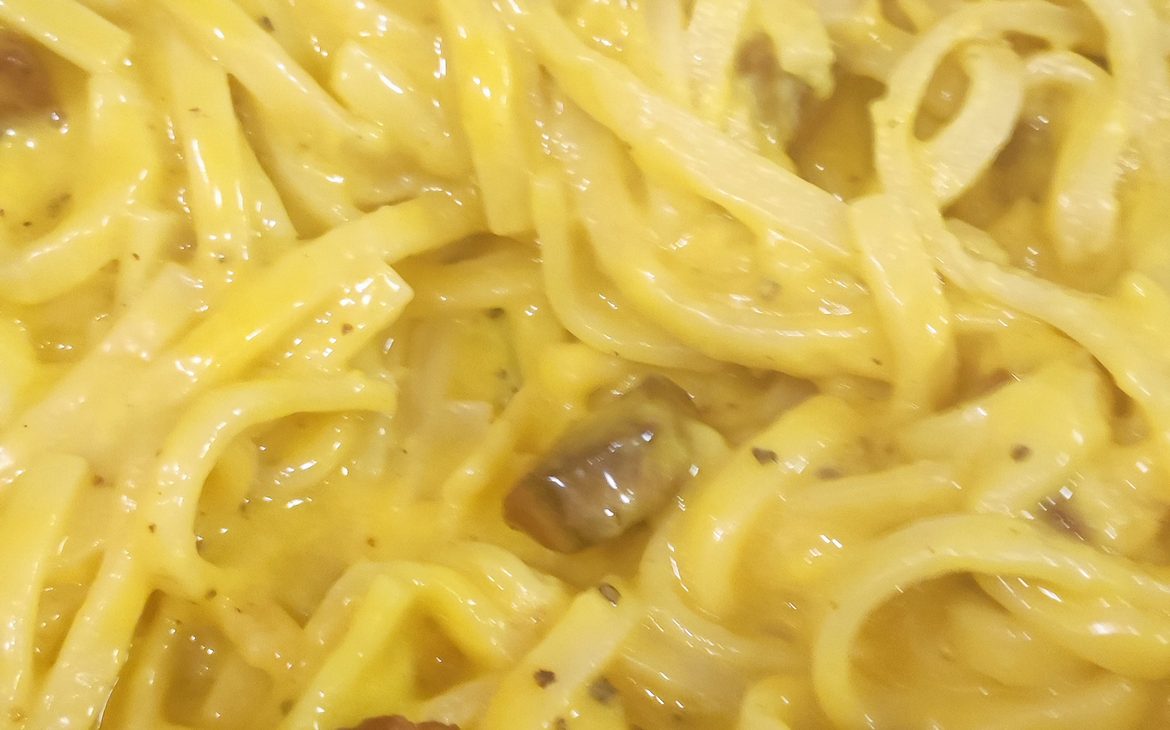
The guanciale and spaghetti are now ready! Drain the pasta and add to the bowl (the one you will serve the pasta from), with the egg mixture and stir quickly creating a smooth and creamy pasta. The spaghetti should be coated with a golden, rich, velvety sauce with pieces of crispy guanciale. Tip: add more grated cheese if your carbonara looks too watery or two tablespoons of water pasta if you feel it is too dry. The pasta water always does the trick as it is the key to creaminess. Sprinkle the remaining guanciale and freshly cracked pepper on top!
Carbonara is best served immediately as the creamy sauce will continue to thicken as it cools down.
Remember, if the heat is too high when you add the egg mixture to the pasta, you get scrambled eggs!
Buon appetito!
liaperillo59@gmail.com


